Introduction
The Fundraising Regulator works to protect the public and build trust and confidence in charitable fundraising by setting, maintaining and promoting the standards in the Code of Fundraising Practice (‘the code’).
We investigate complaints about fundraising that has caused, or has the potential to cause, harm. We consider whether the code has been breached and take action where needed. We also respond proactively to emerging issues to help prevent harm and improve fundraising standards.
This report provides an overview of our casework from 1 September 2025 to 31 August 2026. It highlights common concerns raised in complaints, findings from our investigations and how we work with organisations to address issues. It also shares practical learning to help fundraising organisations improve their practices and meet the standards in the code.
Report methodology
Following the introduction of the new code and changes to our reporting systems, we have revised how we categorise complaints. A single complaint can now be recorded under more than one complaint type or fundraising method to reflect the range of concerns raised.
Our casework now also places greater emphasis on assessing whether organisations meet the standards in the code and identifying improvements to fundraising practices, with less focus on mediating individual disputes.
These changes to how we record and handle cases mean that the figures are not directly comparable with previous years. We therefore do not make year-on-year statistical comparisons in this report.
Number of cases
A case refers to any issue recorded with us, including complaints or self-reports.
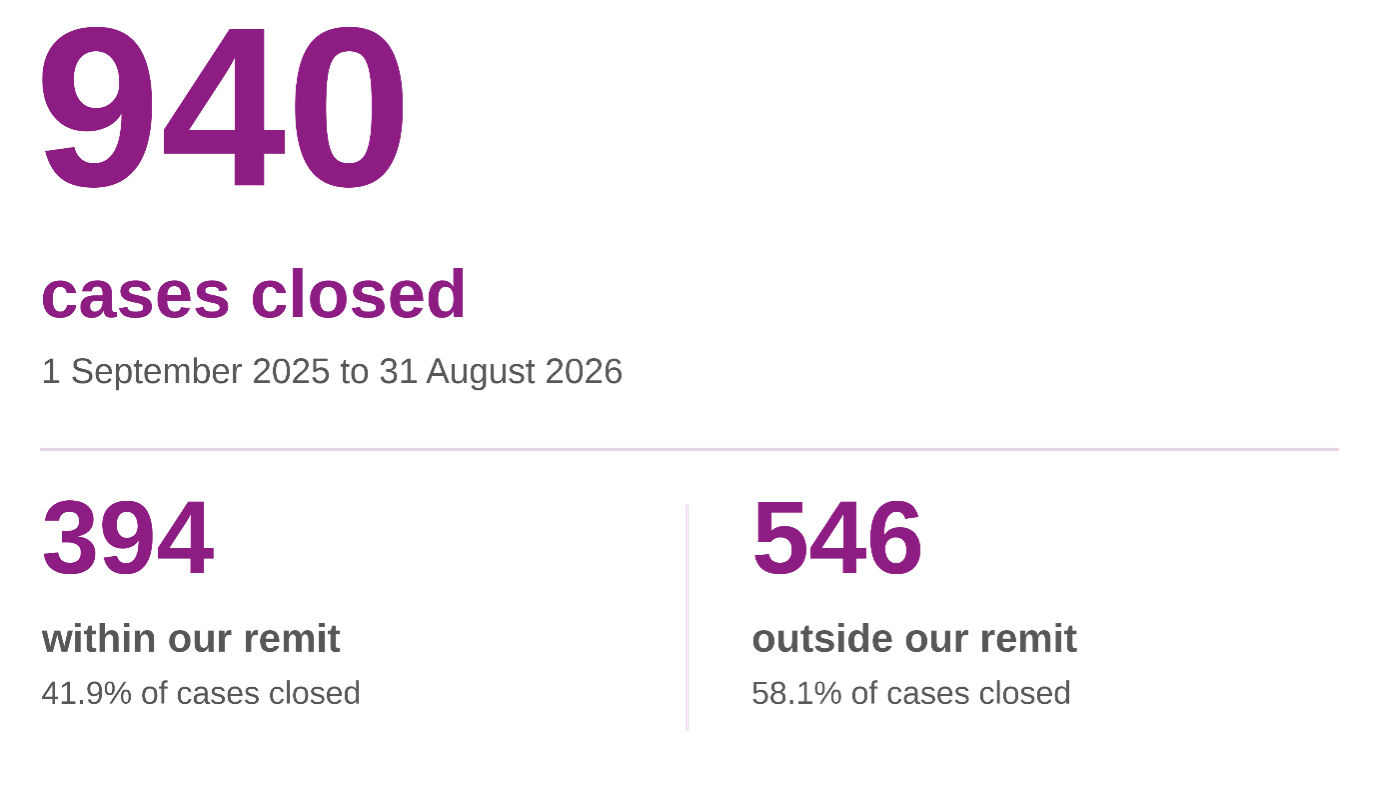
During the reporting period, we received 1,005 cases. We closed 940 cases in total, including cases opened in earlier reporting periods.
Of the cases closed:
- 394 (41.9%) related to charitable fundraising and fell within our regulatory remit.
- 546 (58.1%) were outside our remit. These primarily concerned personal cause fundraising appeals, suspected fraud, or wider governance issues that were more appropriately handled by other regulators or organisations.
Self-reporting
Self-reporting is when a fundraising organisation proactively tells us about a suspected breach of the code that poses an actual or potential risk to the public, the charity sector, or public confidence in fundraising.
During the reporting period, we received 39 self-reports. One self-report led to a formal investigation and two led to compliance cases.
We received a total of 50 self-reports relating to a single data breach involving a customer relationship management (CRM) system used by several fundraising organisations, of which 17 were received during the reporting period.
Fundraising complaints
A complaint is a type of case arising from public concerns or information from other sources. This section covers in-remit complaints closed during the reporting period.
The tables show the most frequently recorded complaint types and fundraising methods. Complaints may appear under more than one type or fundraising method. The figures reflect concerns raised, not findings of code breaches.
Types of complaints
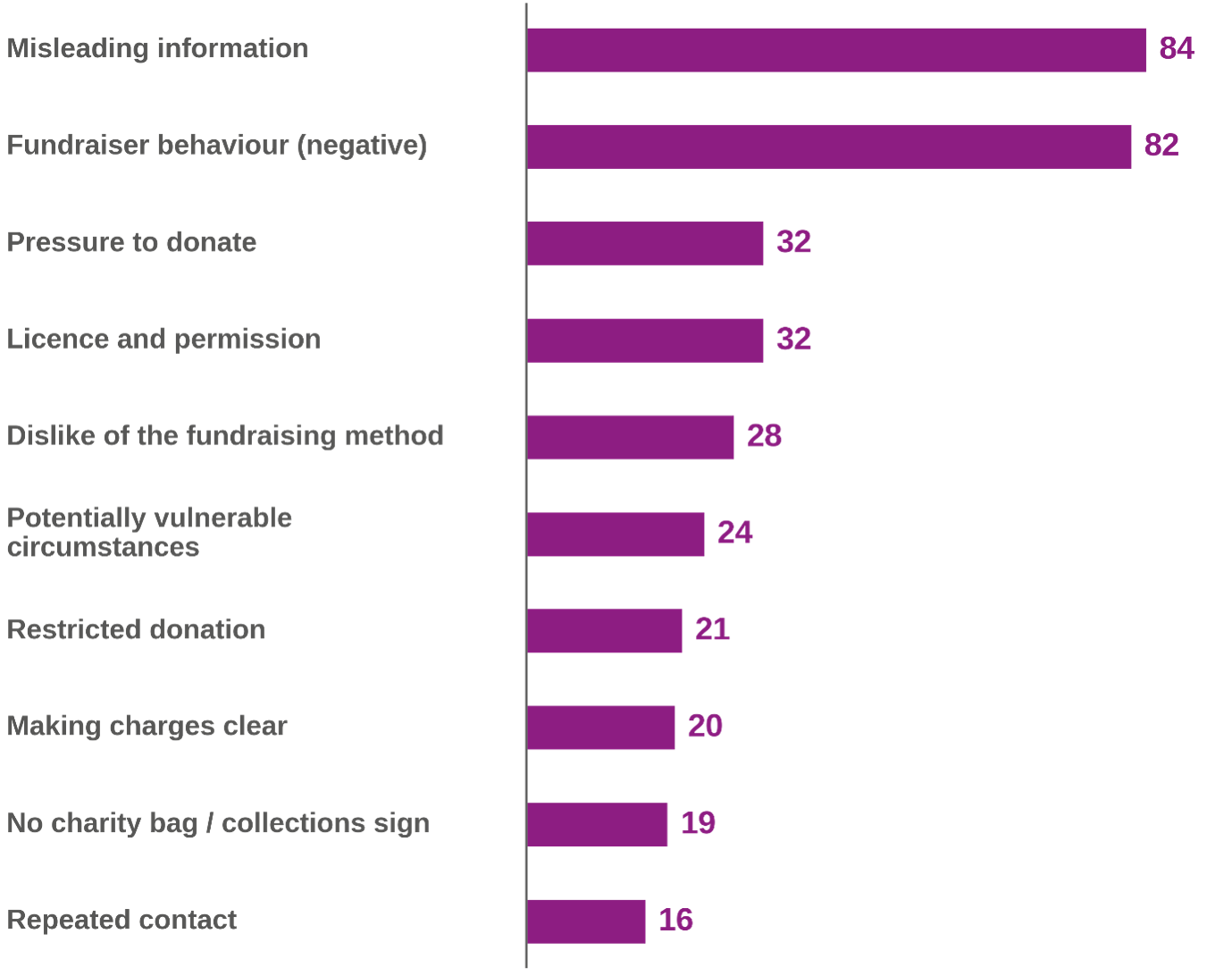
Misleading information and poor behaviour of fundraisers were the most frequently recorded types of complaint this year.
Concerns about misleading information centred on whether people had clear and accurate information about the organisation asking for donations, the work it carried out and how donations would be used. Related complaints concerned whether money given for a specific purpose was used as intended, and whether fees and charges associated with donating were clearly explained.
Complaints about fundraiser behaviour included concerns about how fundraisers spoke to people, conduct that made people feel uncomfortable and approaches continuing after someone had said they did not wish to engage. Other complaints questioned whether fundraisers had the necessary permission to collect.
Complaints by fundraising method
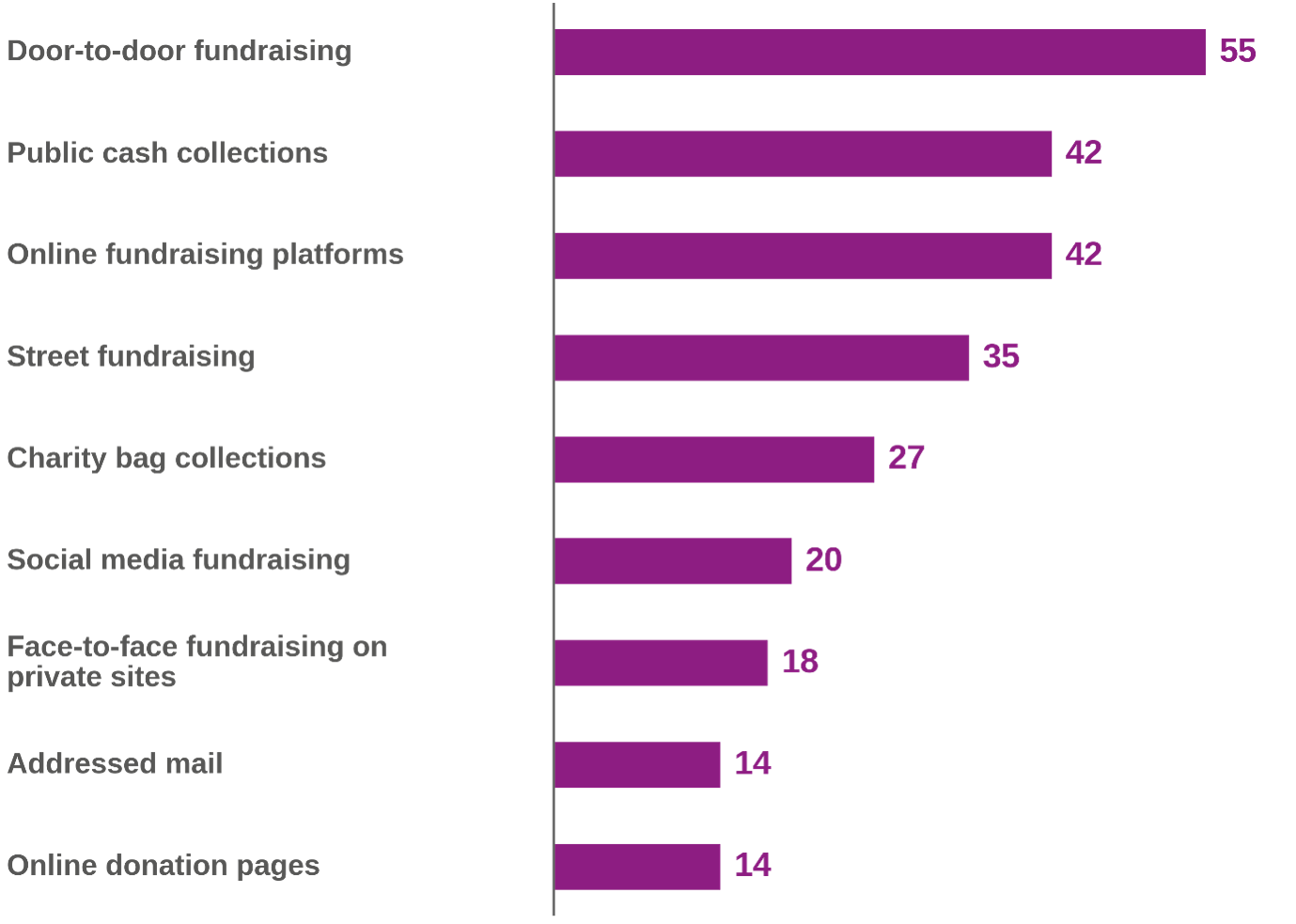
Door-to-door fundraising was the method most frequently recorded in complaints. Public cash collections, online fundraising platforms and street fundraising also featured prominently.
Complaints about in-person fundraising concerned approaches at people’s homes, near station entrances, outside supermarkets, and at fundraising stands in shopping areas. The fundraising involved both requests for immediate donations and approaches seeking regular giving. Concerns about how fundraisers treated people were reported in door-to-door, street and private-site fundraising.
Complaints about digital fundraising involved online platforms, social media and donation pages. They covered sponsored activities and campaigns promoted through social media and online advertising. Some complaints involved more than one method, such as an appeal promoted on social media that linked to an online fundraising platform.
Insights from investigations
If we have information that indicates a serious breach of the code or if an organisation will not engage or co-operate with us about compliance with the code, we may open an investigation. We publish summaries of completed investigations into potential breaches of the code to support learning across the sector and increase transparency for the public.
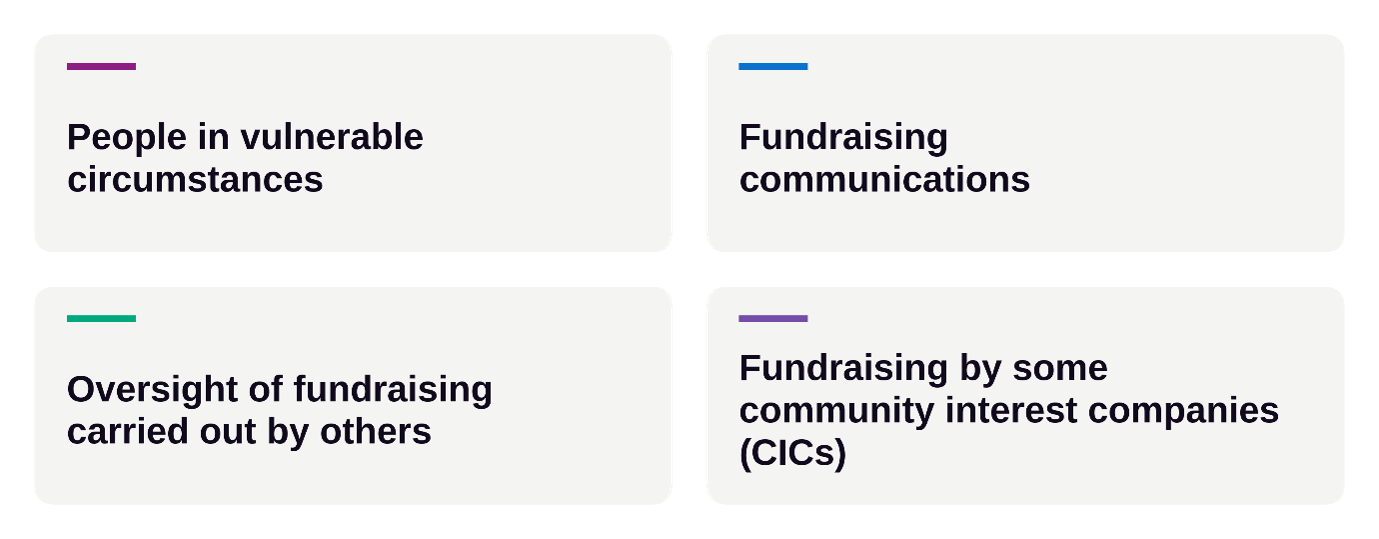
This section sets out the key themes and emerging issues identified through our investigations over the past year. It highlights the trends we are seeing across cases and provides learning to help organisations strengthen their fundraising practices and meet the standards in the code.
People in vulnerable circumstances
Protecting people who may be in vulnerable circumstances was again a theme in our investigations this year. Several cases examined how organisations recognised and responded to a donor’s circumstances, and whether they had appropriate policies, procedures and training to support this.
In some cases, we found that organisations had not adequately considered a donor’s needs before accepting a donation. Our investigations also identified opportunities to strengthen safeguards even where we found no breach of the code.
Fundraising communications
Several investigations this year examined whether organisations gave donors clear and accurate information about their fundraising. These included how organisations described their activities, explained how donations would be used and communicated what would happen if a fundraising campaign did not achieve its aim.
In some cases, important information was missing or unclear. In others, organisations made claims they could not support with evidence. These cases highlighted how the wording and images used in fundraising communications can give donors a misleading impression of what their donation will support.
Oversight of fundraising carried out by others
Several investigations this year examined how organisations oversaw fundraising carried out in their name by agencies and other third parties. These highlighted gaps in how organisations checked, managed and monitored those fundraising on their behalf, particularly where agencies passed work to subcontractors.
In some cases, organisations had detailed agreements and monitoring arrangements with their main agency, but these did not extend effectively to everyone involved in fundraising activity. This limited their ability to oversee fundraising and check whether the same standards were being followed throughout.
Fundraising by some community interest companies (CICs)
Concerns about fundraising by some community interest companies (CICs) were again a theme in our investigations this year. Cases included inappropriate fundraiser behaviour, collections taking place without the necessary permissions and misleading information given to potential donors.
Several investigations drew on information from local authorities as well as complaints from the public. These cases highlighted recurring weaknesses in how some CICs managed their fundraising and responded to concerns about their practices.
Our casework approach
Where information we receive suggests that a breach of the code may have occurred, we may open a compliance case or a full investigation, even if no formal complaint has been made or if a complaint has been withdrawn. In some situations, a full investigation may not be required but improvements are still needed. In these cases, we work with the organisation to agree specific actions.
What is a compliance case?
We open a compliance case when:
• we need further information to understand the concerns, or
• we believe improvement can be achieved without a formal investigation.
Compliance cases may involve a single issue that can be resolved quickly or a concern that is not systemic but may take longer to address. We work with the organisation to support positive change.
External review of our decisions
Parties involved in a case can request a review if they believe there was a material defect in our decision-making process, our decision was manifestly unreasonable, or we refused to reopen a case in response to new evidence. If they remain dissatisfied with our response, they can ask our independent external reviewer to consider whether there are grounds for review.
During the reporting period, one case was considered by the external reviewer, who supported our conclusion that the grounds for review were not met.